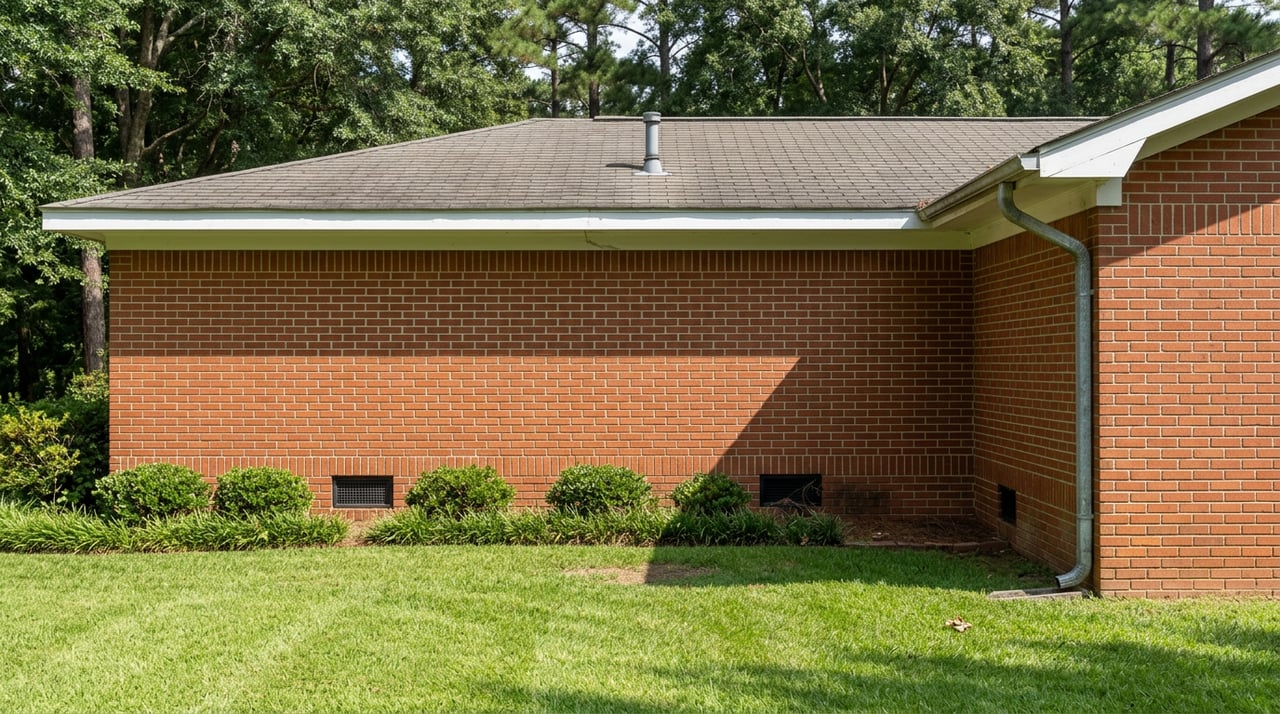
Picture two homes going under contract the same week outside Eatonton. Same price range, same square footage, same buyer profile. One seller closes on schedule. The other spends the final three days of due diligence on the phone with a septic contractor, an anxious buyer, and a closing attorney trying to figure out whether the deal survives.
The difference usually isn't the house. It's when the seller found out what their septic system actually looked like underground, and whether they found out before the buyer's inspector did.
The question that looks routine and isn't
Georgia's Seller's Property Disclosure Statement asks a short, almost administrative question: what is the sewer system, public, private, or septic tank. On paper it reads like a box to check. In practice, checking "septic tank" on a property outside Eatonton's city core sets off a sequence that most other disclosure line items don't touch. It tells the buyer's side that a licensed inspector needs to locate the tank, pump it, check the drain field, and write a report, all inside a due diligence window the buyer negotiated before they had any idea what was under the yard.
The current GAR-approved disclosure form also asks whether the property shares a septic system, well, driveway, or private road with a neighbor, and whether there are any unrecorded easements tied to those shared systems. On a lot with an acre of separation from the next house, those aren't hypothetical questions. Eatonton and the surrounding Putnam County parcels include plenty of homes built decades ago on private systems that were never mapped with modern precision, and a seller who hasn't looked at those records in years can find themselves guessing under a signature line.
Georgia doesn't mandate that specific form by statute, but sellers are still expected to disclose known material defects, and the GAR disclosure statement is what nearly every transaction in the state uses to document that, plumbing and septic-versus-sewer question included. Guessing on that line, or leaving it blank because you're not sure, doesn't make the question go away. It just moves the discovery to a less convenient moment.
Why Eatonton's ground makes this a bigger deal than it sounds
Septic performance depends on soil, and local contractors who work Putnam County properties are specific about the conditions they're designing around. Providers serving the Eatonton area point to clay soils and rolling hills as factors that shape how a system needs to be built and maintained, which means a drain field that works fine in flatter, sandier ground elsewhere in Georgia can behave differently here.
That matters for resale timing because a lot of Eatonton's housing stock, including many homes near Lake Oconee's Putnam County shoreline, has been in place for decades. Foy Septic, which serves the Eatonton area, notes that many of these longstanding lakefront properties carry older septic systems that may need inspection or updating before a sale closes without a hitch. Any system installed before 2000 predates Georgia's two-compartment tank and effluent filter standard, which is one more reason an older Eatonton property is more likely to need a repair conversation than a newer build across town.
None of this means an older system is a problem. It means the odds of a clean pass are lower, and the timeline built into most Georgia contracts wasn't designed with that in mind.
The math on the due diligence clock
Georgia's due diligence period is negotiated into the contract rather than fixed by statute, and in practice it commonly lands somewhere between seven and fourteen days, though shorter windows of three to five days do show up in competitive offers. Whatever the number, the clock starts the day the contract goes binding, and once it expires, a buyer loses the unrestricted right to walk away and get earnest money back.
Here's roughly how that window tends to play out when a septic evaluation is part of the picture:
| Day | What's typically happening |
|---|---|
| Day 0 | Contract goes binding, due diligence period begins |
| Days 1 to 3 | General home inspection is scheduled and completed |
| Days 3 to 5 | Septic contractor locates the tank, pumps it, inspects the drain field |
| Days 5 to 8 | Well water sample sent to a lab, if the property has a private well |
| Days 8 to end of window | Buyer has to decide whether to proceed, request repairs, or terminate |
A septic pump and inspection alone can eat several days of that window before results even land in anyone's inbox. If the drain field shows signs of trouble, or a lab result on well water comes back questionable, the buyer often finds out that news with only a day or two left to negotiate before the deadline that determines whether their earnest money is protected. That's not a lot of runway to schedule a second opinion, price out a repair, or draft an amendment.
What a pre-listing septic check actually buys a seller
Sellers who order their own septic inspection before listing aren't just being cautious. They're moving the discovery to a point in the process where they still control the outcome.
A sequence that tends to work well:
- Schedule a septic pump and inspection several weeks before listing, not the week of.
- If the property has a private well, get the water tested at the same time so both results are in hand together.
- Ask the inspector for a written report you can hand to a buyer's agent or attach to the disclosure.
- If the drain field or tank needs work, get repair quotes before you list so you're negotiating from a number, not a guess.
- Confirm the disclosure form's septic and shared-system questions match what the inspection actually found, and update the answers if anything changes between listing and closing.
Local septic providers in the area, including Lakes Region Septic, describe their standard inspection process as locating and uncovering the tank, pumping it, checking inlet and outlet flow, evaluating the drain field, and documenting everything with photos and a written report. That kind of documentation is exactly what turns a nervous buyer conversation into a straightforward one. A report in hand before a buyer's inspector even shows up changes the tone of the whole due diligence period from reactive to informed.
Cost is modest relative to what a late-stage renegotiation can cost in time and leverage. Local providers quote septic inspections in the area at roughly $400 to $600, and most systems benefit from pumping every three to five years regardless of a sale. If it's been longer than that since the tank was last serviced, that's worth knowing before a buyer's inspector tells you first.
FAQ
Is a seller's property disclosure legally required in Georgia? Not by statute. Georgia doesn't require the specific form, but sellers are still expected to disclose known material defects, and the standard GAR disclosure statement, including its septic and sewer questions, is the document nearly every transaction uses to do that.
What happens if a septic problem turns up during the buyer's due diligence period? The buyer typically has the right to negotiate repairs, request a credit, or terminate the contract and recover earnest money, but only if they act before the due diligence deadline written into the contract. Once that window closes, those options narrow considerably.
How far ahead of listing should a septic inspection happen? Enough time to get a written report back and, if repairs are needed, at least one contractor quote in hand. A few weeks before your target listing date gives you room to act on what the inspection finds instead of discovering it at the same time as your buyer.
If you're weighing a sale in the Eatonton area and want to know what your specific property's septic and disclosure picture looks like before it becomes someone else's discovery, Kay A Mcgiboney can walk through it with you and help you decide what, if anything, needs attention before the sign goes in the yard.