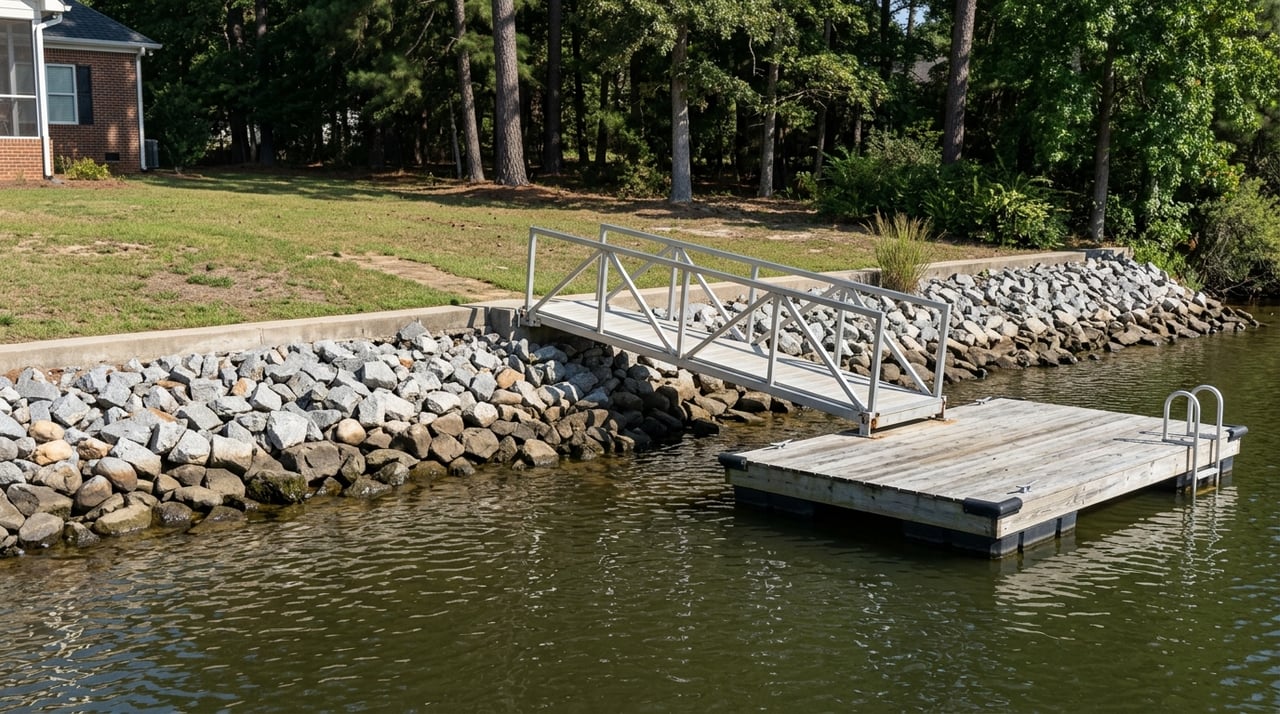
Buying a Lake Sinclair home with a dock can feel exciting right up until you realize the shoreline is not as simple as it looks. A pretty view and a visible dock do not always tell you what you can legally use, repair, or change after closing. If you are shopping in Putnam County, this guide will help you understand the basics of lot type, dock rules, permits, and shoreline red flags so you can buy with more confidence. Let’s dive in.
Why shoreline basics matter
On Lake Sinclair, shoreline rights and structures are regulated by Georgia Power, not handled informally between neighbors or sellers. Georgia Power says docks, boathouses, seawalls, and shelters require written authorization, and lake elevations can change without notice.
That matters because a dock’s value is not just about how it looks in listing photos. It also depends on the legal status of the lot, the approved permit history, and the actual shape and condition of the shoreline.
Start with the lot type
Before you focus on the dock, ask a more important question: What kind of Lake Sinclair lot is this? Georgia Power distinguishes between residential lease lots, access lots, and private-owned lots, and each one comes with different shoreline rights.
Residential lease lots
On a residential lease lot, Georgia Power owns the land or lot, and the lessee owns the improvements. That usually includes the home and shoreline structures.
If you are buying a lease lot, the lease transfer must happen with the closing process. Georgia Power also says it may require a new as-built survey during the transfer.
Access lots
On an access lot, Georgia Power owns a strip of shoreland between the water and the privately owned property. That means Georgia Power controls what can be done in that shoreline area.
For buyers, this can affect whether an existing dock can be updated or whether a future shoreline project is even possible. This is one reason not to rely only on seller comments or MLS descriptions.
Private-owned lots
On a private-owned lot, the owner generally owns down to the lake’s high-water mark. Even so, Georgia Power still keeps project-boundary rights and may also have flood rights or a flood easement that limits shoreline use.
In other words, private ownership does not automatically mean unlimited control at the water’s edge. You still need to verify what rights and restrictions apply.
Know what Georgia Power can approve
Georgia Power says it will not issue permits to new owners or validate existing shoreline structures until the proper legal agreement is signed. That makes Georgia Power the key first stop for shoreline questions on Lake Sinclair.
For Lake Sinclair properties in Putnam County, Georgia Power lists a local land management specialist for shoreline questions. Buyers should confirm details there before making assumptions about a dock, boathouse, or seawall.
Understand common dock rules
Many buyers assume any existing dock can stay as-is or be expanded later. On Lake Sinclair, that is not always true.
Georgia Power uses a flag dock as the standard new dock configuration on its lakes, including Lake Sinclair. It also evaluates shoreline width, straight shoreline, project-boundary width, and cove geometry, not just lot size.
Minimum shoreline matters
For Lake Sinclair lots platted, surveyed, or resurveyed after 2000, Georgia Power says the lot must have at least 100 feet of straight shoreline and 100 feet at the Georgia Power project boundary to qualify for shoreline structures other than a seawall.
Older lots may have lower minimums, but that does not mean every older lot can support every structure. The actual shoreline layout still matters.
Basic dock dimensions
Georgia Power’s published Lake Sinclair criteria say a dock generally may not exceed 16 feet by 20 feet or 320 square feet. Some dimensional variations may apply, but buyers should treat those published limits as an important starting point.
Georgia Power also says a dock should not extend more than 50 feet from the shoreline or more than one-third of the way across a cove. The nearest point of the dock to the projected side lot line should be at least 15 feet away.
Walkways and covers
The main offshore walkway should be between 4 feet and 6 feet wide. Georgia Power also says metal or aluminum carport covers are not allowed as dock shelters.
That can matter if you are looking at an older structure or one that has been modified over time. A dock that looks functional may still have nonconforming features.
Boathouses have tighter limits
Boathouses are often more restricted than buyers expect. Georgia Power says a residential structure must already be on the lot before it will permit boathouse construction.
It also says boathouses on Lake Sinclair must be open-sided and cannot be built or renovated for temporary or permanent residence. Plumbing is not allowed, permanent appliances are not allowed, and gas lines from shore to the boathouse are not allowed.
If a property includes a boathouse, ask whether the existing structure matches the approved footprint and use. Do not assume that enclosed areas, extra features, or later additions were properly approved.
Boat lifts and PWC lifts can be limited
Accessory features can also create surprises. Georgia Power says free-standing boatlifts outside a permitted boathouse roofline are prohibited.
It also says PWC lifts must be inside the building envelope of the shoreline structure. This is one reason listing photos should never replace permit verification.
Seawalls are not automatic
A seawall can look like a simple improvement, but new seawall requests are limited. Georgia Power says new seawalls are only permissible where there is evident cut-bank erosion.
It also says new seawall requests must include applicable county and state permits where required. If wetlands are present, no shoreline abutment of any type is permitted, and riprap is required on the lakeside of any new seawall or seawall replacement.
Tree clearing can affect future use
The shoreline is more than the dock itself. Tree clearing and landscaping can affect stability, appearance, and even permitting.
Georgia Power prohibits unauthorized clearing on its project lands or within 25 feet of the shoreline, whichever is greater. It says unauthorized clearing can lead to required removal of existing shoreline structures and a restoration plan.
Georgia Power also encourages native shoreline plants rather than mowing or hard landscaping all the way to the water’s edge. For buyers, that means a “cleaned up” shoreline is not always a sign that work was done correctly.
Permits: who handles what
For shoreline work on Lake Sinclair, Georgia Power is the starting point for construction permits. It says installation and maintenance of docks, boathouses, seawalls, and shelters require written authorization, and the permit card must be posted visibly from the lake.
At the same time, Georgia Power’s permit process does not replace all other approvals. Its residential permit application says the applicant must obtain any additional permissions or permits required by law.
Georgia Power’s inspection limits
This is an important buyer point. Georgia Power says its inspection is only for conformity with shape, size, location, and aesthetic requirements.
It does not inspect for electrical-code compliance or structural integrity. So even if a dock is permitted, you may still need a licensed contractor, surveyor, or engineer to evaluate condition or major repair needs.
Putnam County’s role
Putnam County also plays a role in shoreline-related work. The county planning department handles building permits, site plan permits, land disturbance permits, zoning compliance, and related development approvals.
If you are considering changes beyond basic maintenance, it is smart to check both Georgia Power and Putnam County early in your due diligence.
A smart buyer checklist
When you tour a Lake Sinclair property, treat the dock like a separate asset that needs its own review. That approach can help you avoid expensive surprises after closing.
Documents to request
Ask for these items as early as possible:
- Deed
- Plat or survey
- Any Georgia Power lease, access lease, or user agreement
- Permit information for the dock, boathouse, seawall, or shelter
- Any recent as-built survey, if applicable
Georgia Power says surveys for lease lots should show shoreline structures, lot setbacks, and the project boundary contour elevation. If boundaries are unclear, a licensed surveyor may be needed.
Questions to ask about the dock
Ask direct questions about the current dock and shoreline setup:
- Is there a current Georgia Power permit card?
- Does the existing footprint match the approved permit?
- Has anything been added, repaired, enclosed, or moved?
- Is the lot a lease lot, access lot, or private-owned lot?
- Are there any known county permits tied to shoreline work?
Georgia Power says permits are no longer valid after the permit completion date, and any change to approved work must be reapproved. That makes permit history especially important.
Inspect the shoreline in real conditions
Do not stop at “there is water at the dock today.” Georgia Power says lake elevations can change without notice, and dock rules also limit extension distance across a cove and require setbacks from lot lines.
That means you should physically inspect the shoreline with the lot’s shape, width, and water conditions in mind. A dock path that works at one water level or angle may not work as easily as you expect year-round.
Plan ahead for lease-lot timing
If the property is a Georgia Power lease lot, timing matters. Georgia Power says buyers should allow about three to four weeks for the transfer process, and the transfer must occur in conjunction with closing.
That can affect your closing timeline, especially if a survey or shoreline paperwork is still outstanding.
A practical order of operations
If you are thinking about buying a Lake Sinclair home in the 31024 area, here is the safest sequence to follow:
- Confirm the lot type.
- Confirm shoreline width and cove geometry.
- Confirm the existing permit status.
- Ask Georgia Power whether a permit is needed for current or future plans.
- Check Putnam County for any building or land disturbance permit requirements.
This order can help you understand not just what exists today, but what you may be able to maintain, repair, replace, or improve later.
Why local guidance helps
Lakefront homes have a different layer of due diligence than many inland properties. On Lake Sinclair, the dock, shoreline, legal agreement, survey, and permit history all matter.
When you have clear guidance early, it becomes much easier to compare properties, spot risks, and decide which home truly fits your goals. If you want a calm, informed approach to buying on the lake, Kay Mcgiboney can help you evaluate the details before they become surprises.
FAQs
What should you verify first when buying a Lake Sinclair waterfront home?
- First, confirm whether the property is a residential lease lot, access lot, or private-owned lot, because that affects shoreline rights, permit transfers, and what changes may be allowed.
What dock rules apply to Lake Sinclair properties in Putnam County?
- Georgia Power says Lake Sinclair docks generally may not exceed 16 feet by 20 feet or 320 square feet, should not extend more than 50 feet from shore or more than one-third across a cove, and should stay at least 15 feet from the projected side lot line.
What permits do you need for a Lake Sinclair dock or shoreline structure?
- Georgia Power says written authorization is required for docks, boathouses, seawalls, and shelters, and Putnam County may also require building or land disturbance permits depending on the work.
What should you ask about an existing Lake Sinclair dock before closing?
- Ask whether there is a current Georgia Power permit card, whether the existing structure matches the approved footprint, and whether any additions or changes were later made.
Can you build or change a boathouse on a Lake Sinclair lot?
- Georgia Power says a residential structure must already be on the lot before boathouse construction can be permitted, and boathouses must remain open-sided with no residential use, plumbing, permanent appliances, or gas lines from shore.
Why does shoreline inspection matter for a Lake Sinclair home purchase?
- Because lake elevations can change without notice, and the lot’s actual shoreline width, cove shape, and dock placement limits can affect how usable the shoreline will be after you buy.